Is there a difference between heavy drinking and alcoholism? Dr. Arnold Washton explains the spectrum of alcohol problems and when drinking crosses the line.
The question people are really asking when they search “am I a heavy drinker or an alcoholic?” usually isn’t academic. It’s personal. They’re looking at their own drinking, or someone else’s, and trying to figure out how worried they should be. That’s a reasonable thing to want to know. But the answer is more nuanced than most of what you’ll find online.
Here’s what I can tell you after 50+ years of clinical practice: the word “alcoholic” isn’t a legitimate medical diagnostic category anymore. We don’t use it in clinical science. What we do recognize is that alcohol problems exist on a spectrum, and where a person falls on that spectrum determines what kind of help actually fits.
Key Takeaways
- “Alcoholic” is not a clinical diagnosis. Modern medicine uses alcohol use disorder (AUD), classified as mild, moderate, or severe.
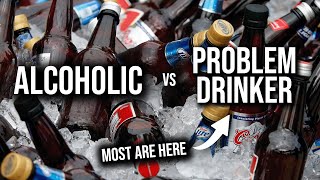
- There are roughly four times as many problem drinkers in the U.S. as there are people with severe alcohol problems.
- Heavy drinking describes a quantity pattern. Alcohol use disorder describes a behavioral and physiological pattern. They overlap, but they’re not the same thing.
- The “off switch” question matters more than how much or how often someone drinks.
- One size does not fit all when it comes to treatment. The severity of the problem shapes what options are realistic.
Why the Word “Alcoholic” Creates Confusion
Most people carry around a mental image of what an “alcoholic” looks like. It’s the person who has lost everything, who drinks from morning until night, who can’t hold a job. That image keeps millions of people from recognizing their own problem, because they don’t match it. They’re still functioning. They’re still paying their bills. They’re privately struggling, but they haven’t collapsed.
We no longer use the term “alcoholic” in clinical practice. It’s not a legitimate medical diagnostic category. What we do now is categorize alcohol problems, in technical terms alcohol use disorders, into three levels: mild, moderate, and severe. That shift in language matters, because it allows people to see themselves somewhere on the spectrum without having to accept a label that feels like an identity sentence.
A high-functioning executive who drinks heavily every evening but shows up to work sharp the next morning doesn’t look anything like the stereotype. Neither does the attorney who only drinks on weekends but can’t stop once she starts. Both may have real alcohol problems. The label “alcoholic” wouldn’t help either of them understand what’s actually going on.
What “Heavy Drinking” Actually Means
Heavy drinking has a specific definition from a public health standpoint. For men, it’s typically more than 14 drinks per week or more than 4 on any single occasion. For women, the thresholds are lower: more than 7 per week or more than 3 at a time. These aren’t arbitrary numbers. They’re based on research about where health risks start to climb.
But here’s what those numbers don’t tell you: whether the person can stop. A person can be a heavy drinker by the numbers and not have an alcohol use disorder. They drink more than the guidelines recommend. They might feel some effects on their sleep or energy. But when they decide to cut back for a vacation or a health goal, they do it without much trouble. The off switch works.
That said, there are about four times as many people in the United States who are problem drinkers, people who have less severe alcohol problems, than there are people with severe alcohol use disorders. That’s a huge number of people who fall somewhere in between “fine” and “severe.” Most of them don’t think they have a problem, because they’re comparing themselves to the worst-case scenario.
When Heavy Drinking Crosses a Line
The transition from heavy drinking to an alcohol use disorder doesn’t happen all at once. It’s gradual, and different people cross different thresholds at different speeds. But there are signs that drinking has moved beyond a quantity issue into something more concerning.
The diagnostic criteria that clinicians use include eleven symptoms. Meeting two or three qualifies as mild AUD. Four or five is moderate. Six or more is severe. Some of the most telling signs:
- Drinking more than intended. You plan to have two glasses and finish the bottle. This happens regularly, not just occasionally.
- Wanting to cut back but not being able to. You’ve told yourself you’ll only drink on weekends, or only two drinks, and you keep failing at it.
- Cravings and compulsions. You find yourself thinking about drinking during the day, planning around it, looking forward to it in a way that feels like more than preference.
- Giving up activities. Things you used to enjoy, hobbies, exercise, time with certain people, have been quietly replaced by drinking or recovering from drinking.
- Relationship conflict. The people closest to you have noticed. They’ve said something. You’ve argued about it.
- Continued drinking despite problems. You know it’s causing issues with your health, your marriage, your work, and you keep doing it anyway.
I see this pattern frequently with high-functioning professionals and executives. A person is a high-level executive or doctor or lawyer during the day and then a heavy drinker at night. They struggle hard to keep the two from overlapping. The doctors I work with are especially good at separating their drinking from their professional life. They won’t be intoxicated on the job. They won’t drink until the early hours if they have to work the next day. But the problem is there, running on a parallel track.
The Physical Dependence Question
Many people assume that if they don’t have the shakes, they’re not physically dependent on alcohol and the problem “must not be that bad.” Physical dependence is simply one set of symptoms. If you’re physically dependent, you almost certainly meet criteria for a significant alcohol problem in other ways too. But the absence of obvious withdrawal doesn’t mean you’re in the clear.
A lot of people overlook what is one of the most reliable hallmarks of physical dependence on alcohol: feeling anxiety, panic anxiety, or a great deal of agitation in the day or two after heavy drinking. Not just a hangover. Real, gripping anxiety that comes seemingly out of nowhere. If you’re experiencing that pattern, you may in fact have a physical component to your alcohol problem, even if you’ve never had tremors or needed medical detox.
Tolerance is another signal people dismiss. Are you drinking more than you used to in order to get the same effect? That gradual escalation is your body adapting to alcohol, and it’s a clinical marker worth paying attention to.
The Spectrum That Most People Don’t Know About
The most useful way to think about all of this is as a spectrum. On one end, you have people who drink within guidelines and experience no problems. On the other end, you have people with severe, life-altering alcohol use disorders. In between is a wide range of problem drinking that gets far less attention than it should.
Here’s a number that surprises most people: roughly 95% of treatment programs in the United States are built on an abstinence-based, AA-oriented model. That model works well for people with severe problems. But it’s a poor fit for the much larger group of people with mild to moderate alcohol problems who aren’t ready for abstinence and don’t need it. When the only option offered is “stop drinking completely and go to meetings,” most of those people won’t seek help at all. Understandably so.
This is where clinical science, not ideology, should be guiding the conversation. Any steps taken to reduce the risk of harms or the actual harms caused by a person’s alcohol use, any steps taken, are steps in the right direction. You start where the person is. Not where you think they should be.
Why Some People Lose the “Off Switch”
One of the questions I hear most often is “why me?” Why can some people have a couple of drinks and walk away, while others can’t seem to find the off switch?
Honestly, it’s still a bit of a mystery. We know genetics play a role, but less than a third of people with alcohol problems come from families where the problem was present. We know that emotional and psychological factors matter. I have not seen a single person who has come seeking my help saying that their problem with alcohol developed during a time in their life when they were reasonably happy and self-satisfied. Not one. There’s almost always something else going on: stress, unhappiness, anxiety, unresolved grief, boredom, loneliness. The drinking fills a gap or numbs a pain, and over time the brain’s reward circuitry reorganizes around it.
But pinpointing one cause? We can’t do that reliably. And anyone who tells you they can is probably selling something. What we can do is help a person understand their own pattern, their own triggers, and build a realistic plan based on where they actually are.
So Where Does That Leave You?
If you’re reading this article trying to figure out whether you’re “just” a heavy drinker or something more, here are a few questions worth sitting with:
- When you set a limit on your drinking, can you stick to it consistently?
- Do you experience anxiety, agitation, or sleep disruption in the day or two after drinking?
- Have people close to you expressed concern?
- Have you been quietly worried about your own drinking, even if you haven’t said it out loud?
- Does the idea of going two weeks without a drink feel difficult or uncomfortable?
None of these questions have pass/fail answers. They’re meant to give you a clearer picture of your own relationship with alcohol. If several of them hit close to home, it’s worth having a conversation with someone who can help you sort it out. Not to be told what to do, but to understand your options.
What Realistic Help Looks Like
For people with mild to moderate alcohol problems, treatment doesn’t have to mean residential treatment or 90 meetings in 90 days. It can mean individual therapy that fits around a work schedule. It can mean sobriety sampling, a period of voluntary abstinence to see what life feels like without alcohol, as a way to gather information rather than make a permanent commitment. It can mean medication that reduces cravings so you’re not white knuckling through every evening.
For those with more severe problems, abstinence is usually the safest and most realistic path. Anyone who has been physically dependent on alcohol and gone through withdrawal will typically have a very difficult time trying to moderate. I won’t say the chances are zero, but they’re going to have a rough time. The less severe the problem when someone comes for help, the better the prognosis for being able to achieve moderate drinking at some point.
What I’ve found over decades of practice is that offering moderation as an option actually brings more people into treatment, not fewer. And about 25% of those who start with a moderation goal eventually decide on their own to move toward abstinence, based on their own experience. That’s progress, not perfection. And it happens because you start where the person is, rather than demanding they start where you want them to be.
Frequently Asked Questions
Do “alcoholics” drink every day?
Not necessarily. Some people with severe alcohol problems drink in binges rather than daily. The frequency of drinking matters less than what happens when a person does drink. Someone who drinks only on weekends but consistently loses control, blacks out, or experiences withdrawal symptoms between episodes may have a more serious problem than a daily wine-with-dinner drinker. The pattern that matters most is whether the person can reliably stop once they start and whether they experience negative consequences.
Can you be an “alcoholic” without drinking often?
Yes. Alcohol problems aren’t defined by how often someone drinks. They’re defined by what happens when they do drink and the role alcohol plays in their life. Someone who drinks only a few times a month but consistently drinks far more than they planned, experiences cravings between episodes, and suffers consequences from those episodes may meet the criteria for an alcohol use disorder. The clinical focus is on the pattern of behavior and consequences, not the calendar.
What is considered an “alcoholic”?
The term “alcoholic” is no longer used as a medical diagnostic category. Modern clinical science uses “alcohol use disorder” (AUD), which exists on a spectrum from mild to severe. A person meets the criteria for AUD when they exhibit two or more of eleven diagnostic signs, including drinking more than intended, inability to cut down, cravings, tolerance, withdrawal, and continued drinking despite problems. Mild AUD involves 2-3 criteria, moderate involves 4-5, and severe involves 6 or more.
What is the difference between a heavy drinker and an “alcoholic”?
A heavy drinker regularly exceeds recommended drinking guidelines but may not yet show signs of dependence or significant life consequences. Someone with a severe alcohol use disorder (what people traditionally call an “alcoholic”) typically shows multiple signs including loss of control over drinking, physical dependence with tolerance and withdrawal, continued use despite serious relationship or health problems, and an inability to cut back despite wanting to. The key distinction is that heavy drinking describes a quantity pattern, while alcohol use disorder describes a behavioral and physiological pattern. Many heavy drinkers won’t develop a severe problem, but heavy drinking does increase the risk.
Can a heavy drinker learn to drink moderately?
For many heavy drinkers, especially those with mild alcohol problems, moderated drinking is a realistic goal. Research shows that about 25% of people who initially try moderation eventually decide on their own to move toward abstinence based on their experience. The less severe the problem when someone seeks help, the better the odds of successfully moderating. People who have experienced physical dependence, gone through withdrawal, or needed detox medication will typically have a much harder time maintaining moderation and are usually better served by abstinence.
Citations
- American Psychiatric Association. (2013). Diagnostic and Statistical Manual of Mental Disorders (5th ed.). DSM-5 criteria for Alcohol Use Disorder.
- National Institute on Alcohol Abuse and Alcoholism (NIAAA). “Alcohol Use Disorder: A Comparison Between DSM-IV and DSM-5.” niaaa.nih.gov
- Substance Abuse and Mental Health Services Administration (SAMHSA). (2023). “Key Substance Use and Mental Health Indicators in the United States.” National Survey on Drug Use and Health.
- Centers for Disease Control and Prevention. “Alcohol Use and Your Health.” cdc.gov
- Witkiewitz, K., & Marlatt, G.A. (2006). “Overview of harm reduction treatments for alcohol problems.” International Journal of Drug Policy, 17(4), 285-294.